

Age 4
Age 4: Ask, try and discover again
Our age-four approach makes room for questions, predictions and different possible solutions. “What do you think might happen?” can invite children to imagine a story’s ending or explore how a structure stays upright.
Expressing an idea and hearing someone else’s are both valuable. Discussing roles, choosing materials and reconsidering a result bring play, conversation and discovery together.
The examples below illustrate our educational approach. Children are not expected to show the same skills at the same time; activities vary with the group’s interests and the school’s current plan.
Play and learning
What matters in everyday experiences
Questions and observation
Looking closely, noticing details and describing a question in a child’s own words.
From idea to creation
Choosing materials for a picture, structure or game and giving an idea shape through experimentation.
Finding solutions together
Listening to different suggestions in shared play and trying another way when something does not work.
Creating stories
Discussing events, imagining what a character might think and making stories from pictures.
Patterns and comparisons
Grouping objects by their features, noticing repeating patterns and comparing things in everyday play.
Art and movement
Expressing an idea through colour, rhythm, role play and movement without requiring one correct finished product.
Illustrative activity ideas
What could we explore together?
01
Design a bridge
Large blocks and suitable construction materials can be used to build a bridge for a toy vehicle. Children discuss their choices and try different arrangements if the structure does not stand.
02
The story of a leaf
A leaf’s colour, shape and texture can invite observation. Drawing, collage or storytelling can turn that observation into another form of expression. Adults check the suitability of natural materials.
03
Change the ending
What might happen if a familiar character made another choice? Children can use drawings, puppets or role play to suggest endings and listen to one another’s ideas.
Language through experience
Everyday encounters with English
Stories, movement and play can create meaningful encounters with English. Describing a character, choosing an object in a game or joining a song connects language with something children are doing.
The aim is not to make a child speak on demand. Curiosity, repeated encounters and willing participation are priorities. Ask the school team about the group’s current programme.

Connecting home and school
With families, at each child’s pace
We value hearing what a child was thinking while making a picture, not only seeing the result. Open questions such as “How did you think of that?” create room for explanation instead of an immediate adult solution.
Family conversations can cover interests, enjoyable experiences and challenging moments. The purpose is to understand the child’s school life and find a shared language between home and school, not rank children.
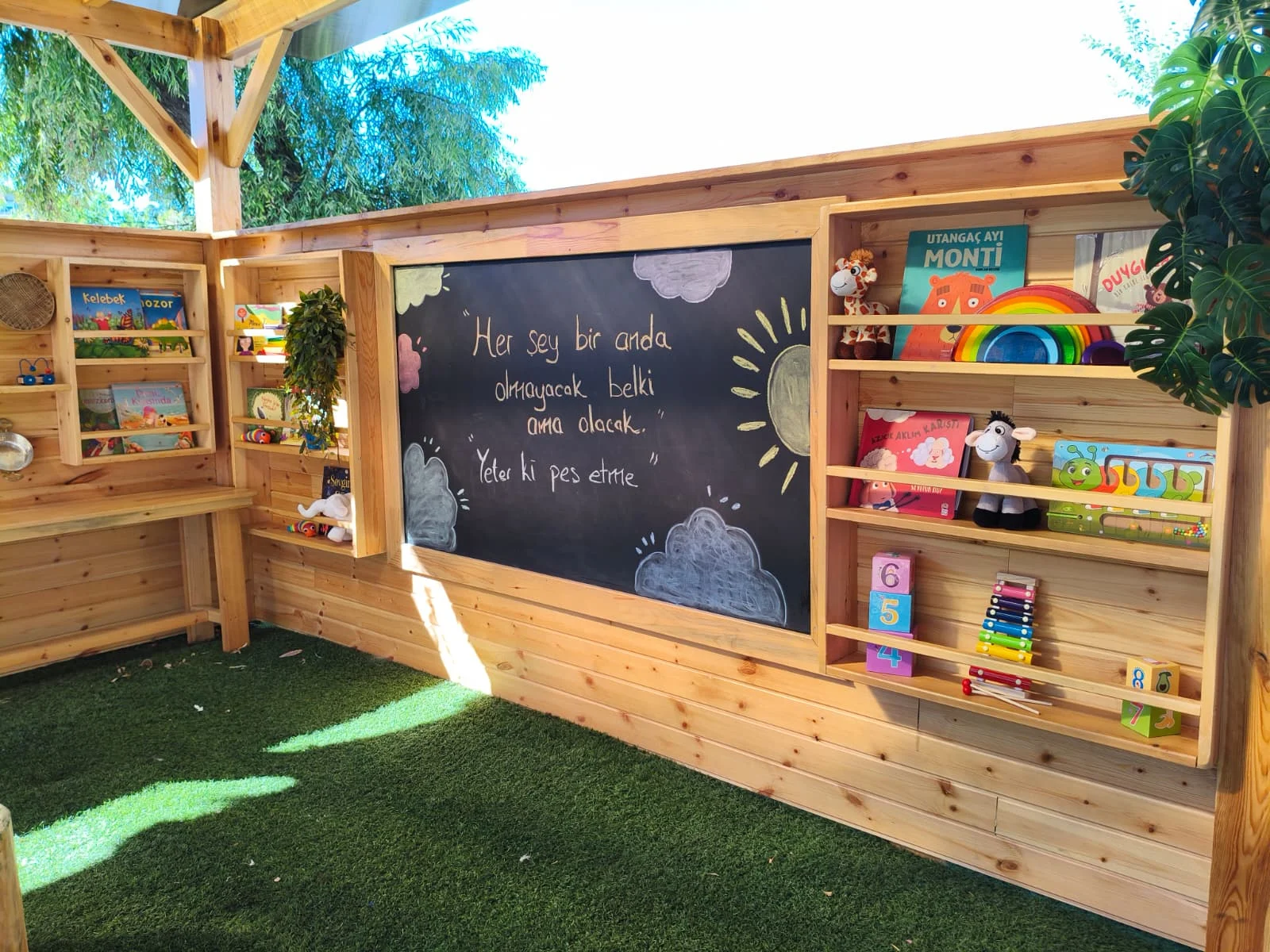
Spaces to explore at our school

For families
Your questions
Does everyone make the same thing?
Using the same materials does not mean producing identical results. Different choices, explanations and attempts can be meaningful parts of the experience.
Is this formal reading and writing instruction?
The approach described here uses stories, sounds, expression, drawing and play. It does not promise an academic level or reading outcome. Discuss current content and arrangements with the school.
What if my child is quiet in group activities?
Children participate in different ways. Watching, choosing a small role or sharing an idea later can be topics to discuss with the school team.
Must we repeat school activities at home?
There is no need to assume a checklist of tasks. Sharing a book, discussing everyday experiences or joining a child’s chosen game can offer valuable time together. Individual suggestions can be discussed with the school.
Let’s talk about the age 4 group
Let’s talk about your child’s interests, your expectations and your questions. Contact us to arrange a visit to our school in Ümitköy.