
Age 2
Age 2: First discoveries, together
Starting school means meeting new people, sounds and spaces. Our approach to the age-two group centres on a familiar, caring relationship and giving children room to join play in their own way.
A short story, a texture to explore, a shared song or a game repeated many times: we value small everyday experiences rather than large expectations. Getting to know a child without rushing and talking with the family are important parts of this beginning.
The activities below illustrate our approach. Group placement, settling-in arrangements, care needs and the current programme are discussed individually with the school.
Play and learning
What matters in everyday experiences
Familiarity and trust
Allowing time to get to know adults and the classroom, while noticing each child’s choices to approach, watch or join in.
Sensory exploration
Exploring the texture, colour and shape of large, age-appropriate materials, with attention to the experience rather than a finished result.
Space to communicate
Pointing, making a sound, saying a word or using a gesture: responding attentively to different ways of communicating.
Small choices
Choosing between two games, bringing a book or returning one item after play are small opportunities to take part.
Movement and rhythm
Moving with a song, rolling a ball or joining a simple movement game, while respecting the child’s interest and willingness.
Being together
Noticing other children while playing nearby and creating shared moments with adult support, without forcing children to share.
Illustrative activity ideas
What could we explore together?
01
Exploring textures
Large pieces of fabric and suitable objects can invite exploration of soft, smooth and textured surfaces. A child may choose simply to watch. Materials and their use always require appropriate adult supervision.
02
One book, many encounters
A short picture book can be revisited many times. Instead of finishing every page, an adult might pause at a picture the child notices, imitate a sound or talk about what is happening.
03
Roll and respond
Rolling a large ball, adding hand movements to a song or carrying toys to a basket can bring together movement, communication and short shared moments.
Language through experience
Everyday encounters with English
At this age, encountering English is not a requirement to memorise words or start speaking. A greeting song, a repeated short phrase or sounds in a picture book can connect language with play.
Listening, watching, joining a movement or choosing not to participate are all respected. Ask the school about current programme arrangements and teacher involvement.

Connecting home and school
With families, at each child’s pace
We would like to hear what your child enjoys, how they communicate and how they respond to new places. Everyday topics such as meals, rest and care routines are important parts of a conversation between family and school.
Rather than assigning every child the same settling-in deadline, the beginning should be discussed together. We do not promise a fixed adjustment time or identical progress for every child.
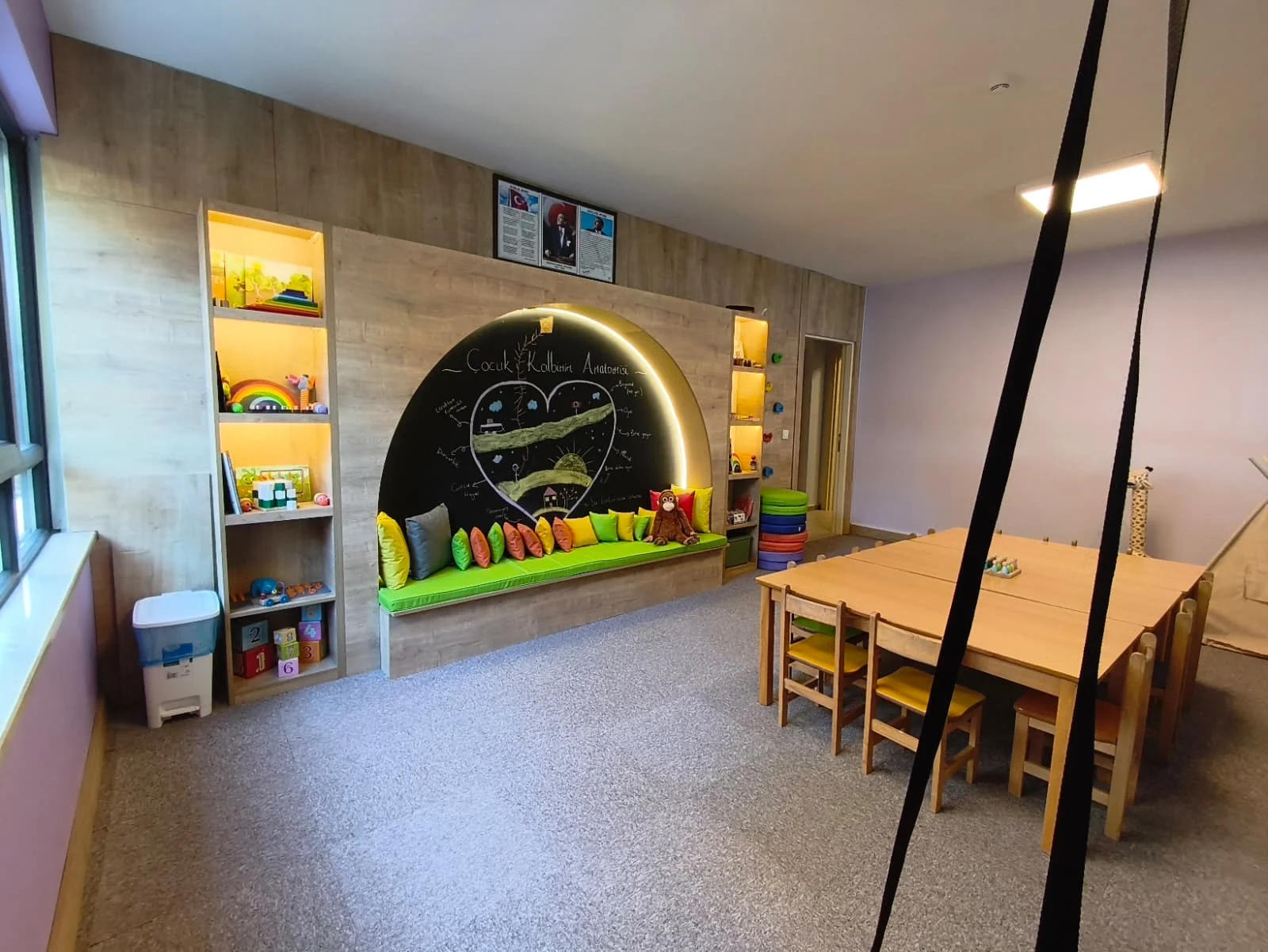
Spaces to explore at our school


For families
Your questions
How is age-two placement considered?
Placement should not be assumed from age alone. A child’s date of birth, everyday needs, family expectations and current group conditions should be discussed with the school. Contact us for admission requirements and availability.
How can we discuss meals, rest and toileting?
Please raise these topics before enrolment. Your child’s routines and needs should be considered alongside the arrangements the school can provide. This page does not promise a particular care service or admission requirement.
What if my child prefers to watch first?
Joining immediately is not the only way to participate. Talk with the school about your child’s observations and preferences and how the settling-in process can be reviewed together.
Are full-day and half-day places available?
Current attendance options, hours and fees should be confirmed with the school. When calling, it is helpful to share your child’s age and the start date you are considering.
Let’s talk about the age 2 group
Let’s talk about your child’s interests, your expectations and your questions. Contact us to arrange a visit to our school in Ümitköy.